How Bean Bags Are Manufactured in China

How Bean Bags Are Manufactured in China
China’s bean bag industry combines material science with efficient production processes. Here’s a practical look at how these popular products go from raw materials to finished goods.
At Zhejiang Welling , we’ve been manufacturing bean bags and foam furniture for over 17 years. Here’s what we’ve learned about the process.
This article is part of our Bean Bag Guide series, where we cover everything from filling materials to manufacturing processes.
📹 Watch our factory tour: [LinkedIn video link here ]
1. The Core: Filling Materials
Most high-quality bean bags in China use one of two main filling types:
EPS (Expanded Polystyrene) Beads are the classic, lightweight choice that gives bean bags their signature moldable feel. These beads are produced using specialized pre-expander machines that expose raw EPS pellets to steam and heat, creating uniform, lightweight spheres. The process requires precise temperature and pressure control to achieve consistent bead density.
Recycled Foam (Shredded Sponge) has emerged as a premium, eco-friendly alternative. Leading manufacturers use reclaimed polyurethane sponge scraps from furniture production, which are cleaned, dried, and mechanically shredded into fragments. This approach was notably used for the 2024 Paris Olympic Village bean bags, proving that recycled materials can match or exceed the comfort of virgin fillings. It’s also a sustainable choice, giving industrial waste a second life.
2. Step-by-Step Manufacturing Process
Step 1: Material Preparation
-
For EPS beads: Raw EPS pellets are pre-expanded using steam and heat, then aged to stabilize before final molding.
-
For recycled foam: Waste sponge is cleaned, dried, and cut into small chunks using specialized foam shredding equipment.
Step 2: Cover Production
The outer fabric covers are cut and sewn according to design specifications. China’s mature textile industry clusters—particularly in Zhejiang province—provide a complete ecosystem for sourcing fabrics, zippers, and custom labels in one place.
Step 3: Filling and Assembly
Using filling machines, the prepared material is pumped into the inner liner. High-quality manufacturers use tear-resistant nylon or polyester liners and reinforce seams with double-stitching for durability.
Step 4: Compression Packaging (A Key Competitive Advantage)
This is where Chinese manufacturers excel. The filled inner bag is placed into a plastic bag, vacuum-sealed, and compressed to a fraction of its original volume. As one factory noted, a 165×58×85cm sofa can be compressed into a neat roll within minutes. This significantly reduces shipping costs and storage space.
Step 5: Outer Cover Fitting and Quality Checks
The outer cover is either fitted before or after compression, depending on the design. Each unit undergoes final inspection before packing.
👉 View our bean bag product collection →
📹 See our production process: [LinkedIn video link here]
3. Industry Clusters and Capabilities
China’s bean bag manufacturing is concentrated in Zhejiang province, particularly around Jiaxing and Tongxiang, where the entire supply chain—from foam production to fabric sourcing—exists within a short radius. This proximity enables faster prototyping and more responsive production.
Leading facilities are adopting fully automated compression and packaging lines. For example, some factories have invested over 10 million RMB in automated equipment capable of handling sponge continuous foaming, cutting, and vacuum packing in a single integrated workflow. This allows for monthly production capacities reaching hundreds of thousands of units.
4. OEM Customization: From Standard to Bespoke
Most Chinese bean bag factories operate on an OEM (Original Equipment Manufacturing) model. Buyers can specify:
-
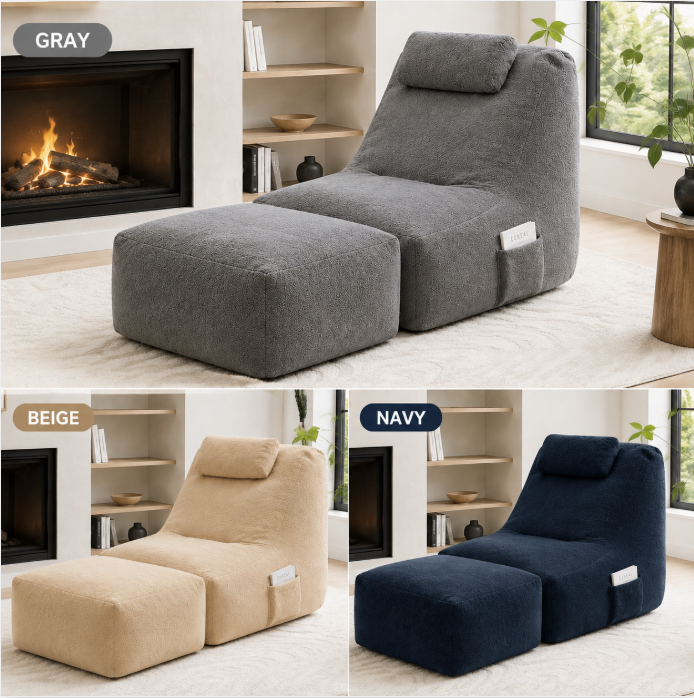
Shape and structure: ergonomic chairs, modular units, custom geometric designs
-
Fabric: corduroy, velvet, faux leather, Oxford cloth
-
Filling: EPS beads, shredded foam, or hybrid blends
-
Branding: custom labels, printed logos, embroidery
-
Packaging: branded boxes or bags
The process typically moves through consultation → prototyping (7-15 days) → production → quality assurance. Agile factories can deliver custom samples within days and adjust designs before mass production.
For a complete overview of bean bag manufacturing and sourcing, see our Bean Bag Guide.
5. Quality and Compliance Standards
For export to regulated markets, suppliers should meet:
-
Fire safety: CAL 117 (US), BS 5852 (UK) – the strictest standard used for the Paris 2024 Olympic order
-
Fabric safety: OEKO-TEX® Standard 100
-
Social compliance: BSCI or ISO 9001
Manufacturers serving major retailers like Walmart, Costco, and Sam’s Club maintain rigorous batch testing and documentation.
Summary
China’s bean bag manufacturing combines:
-
Two core filling technologies: EPS beads and recycled shredded foam
-
Compression packaging that cuts shipping volume by 70%+
-
Concentrated supply chains in Zhejiang for rapid prototyping and bulk production
-
Full OEM capabilities: from custom fabrics to branded packaging
-
Certification readiness for fire safety, fabric safety, and social compliance
Related Guides:
→ Bean Bag Guide
→ Foam filled bean bag Guide
→ Sofa in a Box Guide
→ Pet Bed Guide
Zhejiang Welling – Ready to develop your bean bag line? Contact us for material samples and production specifications. (Or email us directly: james@tptex.com)
#BeanBagManufacturing #HowItsMade #BeanBagFactory #OEMBeanBag #ZhejiangWelling
Note: The information above is compiled from industry knowledge and publicly available sources for illustrative purposes.
Bean Bag Cover: European Market Insights 2026
The Bean Bag Renaissance: Why 2026 Is the Year of Ultimate Comfort
Related Article